How wins and losses were bought and sold in the Red River Rivalry
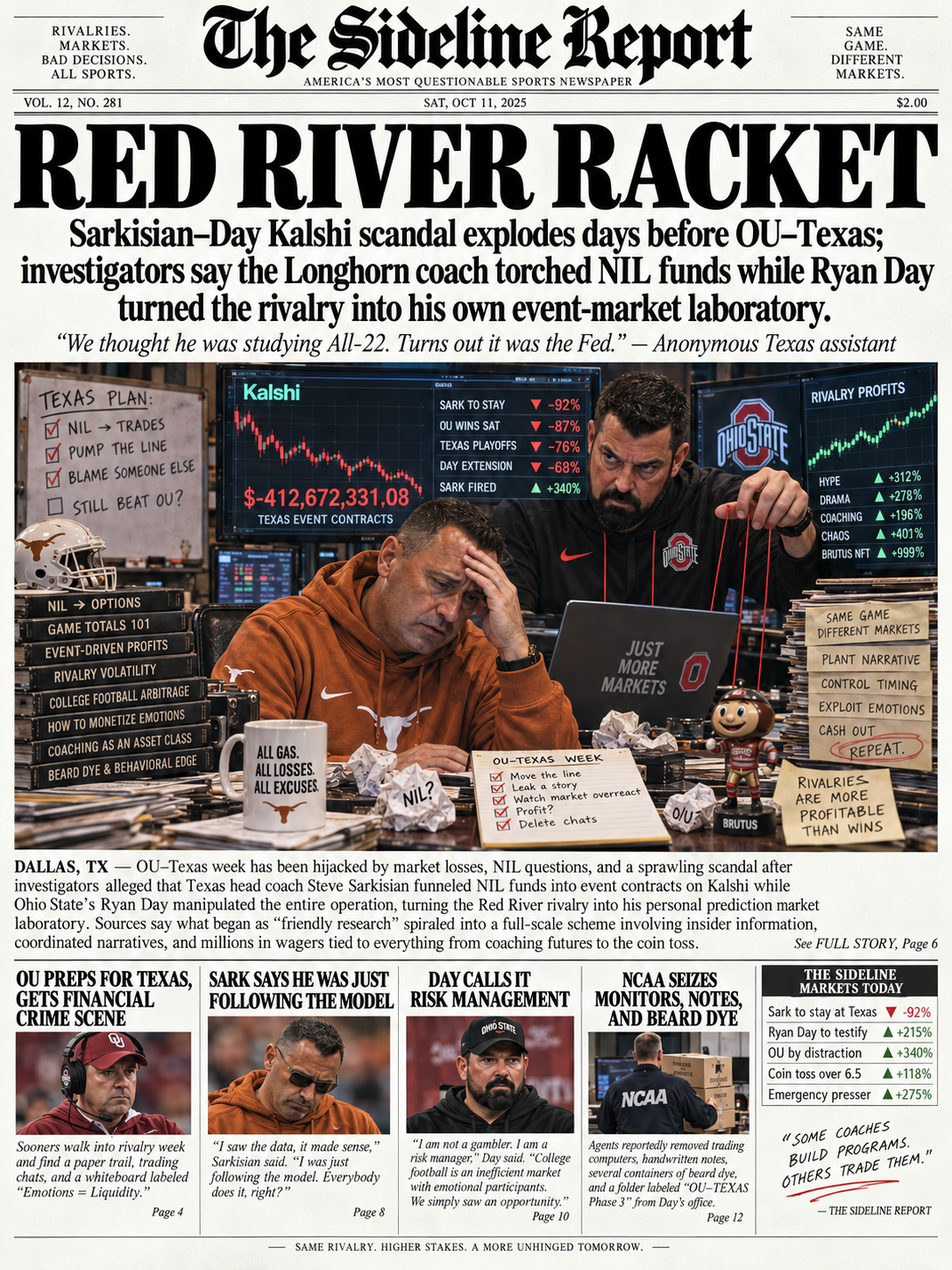
Texas oil tycoon allegedly paid $1.3 billion for a Longhorn victory in 2018. He bought October. Nobody told him December was sold separately.
DALLAS — A Texas oil tycoon allegedly paid $1.3 billion to make sure the Longhorns beat Oklahoma in 2018. Texas won. He celebrated. He commissioned a painting of himself beside the Golden Hat.
Then the teams played again.
Oklahoma won the rematch, and the man who thought he had purchased a permanent place in rivalry history discovered he had bought the October package.
“December was a separate product,” an associate explained.
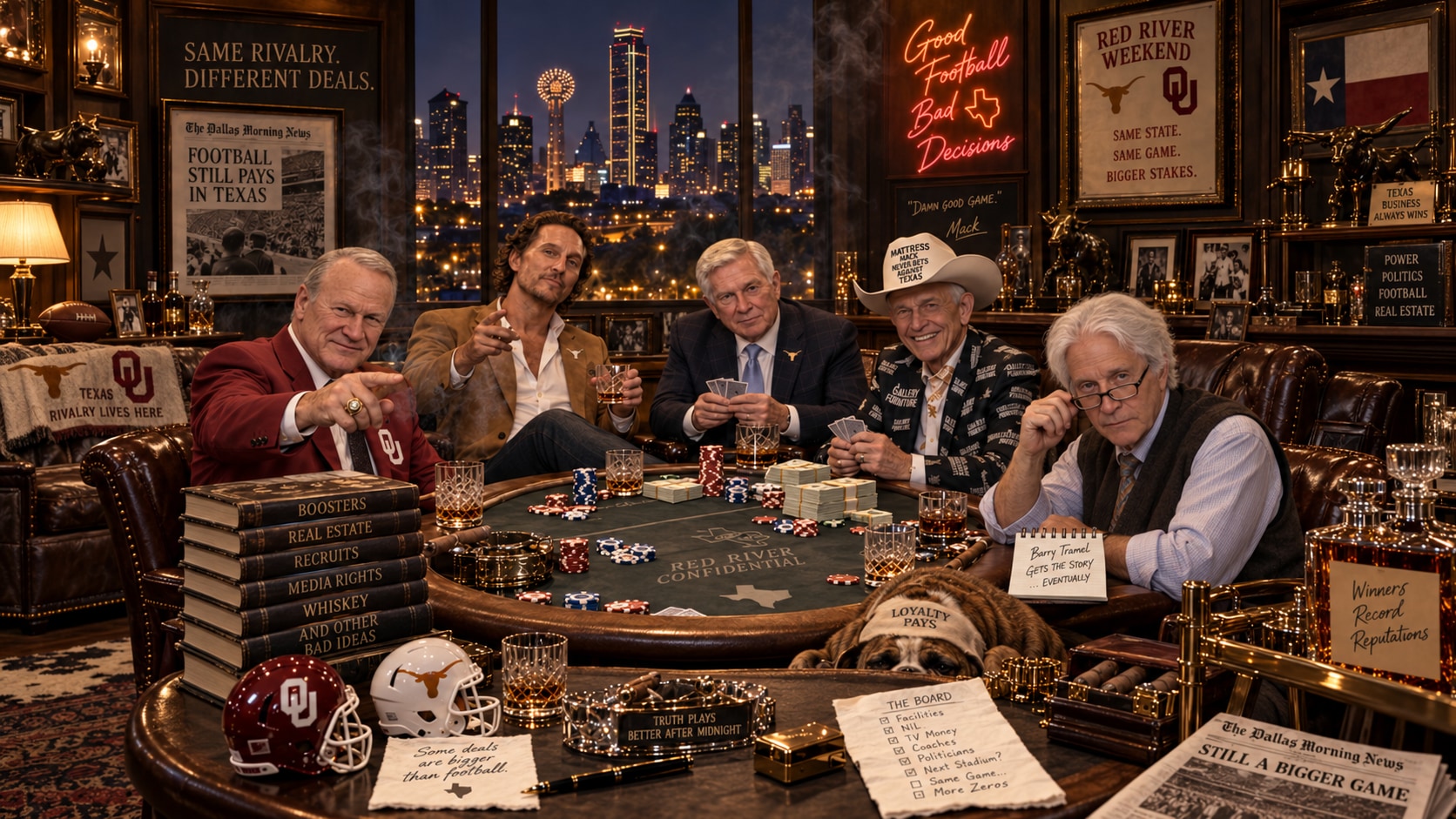
That disputed invoice is the centerpiece of a battered book labeled WEST END ACCOUNTS RECEIVABLE — a ledger that allegedly traces decades of Red River wins and losses through poker debts, Texas oil money and a collections department overseen by Barry Switzer, Brian “The Boz” Bosworth and, later, Demond Parker.
When a win was a form of payment
The arrangement reportedly began in the early 1980s, when private card games left several wealthy Texans owing the Oklahoma contingent considerably more than they wanted their accountants to discover.
One man lost a ranch. Another lost mineral rights. A third lost the concept of mineral rights and was required to explain it to Switzer every Thanksgiving.
“They were rich,” one source said. “That doesn’t mean they had any money.”
The solution was a system of “Saturday accommodations.” Debts could allegedly be settled with a rivalry result, with wins and losses changing hands from the early 1980s through the late 1990s. Both sides participated. Neither side agreed on the exchange rate.
A donor who tried to claim a narrow defeat as partial payment received a note attributed to the Boz: “Losing by three is still losing. Do not send me a field goal and call us even.”
Parker later joined collections, bringing what associates called excellent closing speed.
“He didn’t send a second notice,” one debtor said. “He was the second notice.”
By the 2000s, $100 million only got you considered
As television money grew and more people needed a cut, the old handshake system became considerably harder to operate. A conversation over cards turned into a formal application process.
Eventually, the minimum reached $100 million merely for consideration.
“That gets your folder opened,” an intermediary said. “It does not get your team across midfield.”
Applicants had to provide proof of funds, three references and an explanation of why their preferred result would not upset someone wealthier. One executive wired the fee and received a commemorative coin.
The coin said CONSIDERED.
2018: One win. One fair. No postseason coverage.
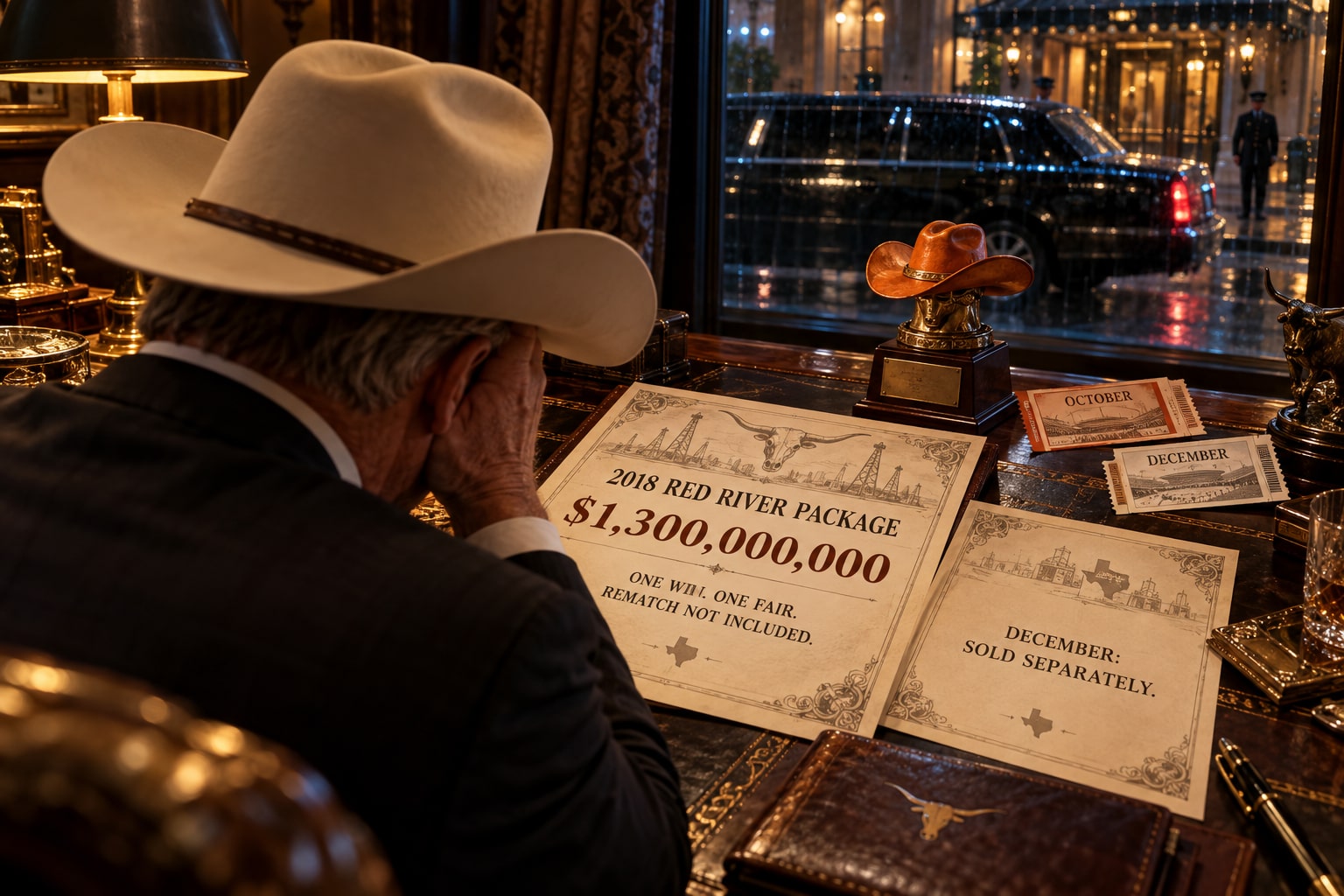
The biggest entry belongs to a customer identified only as LONE STAR PREMIUM CUSTOMER. His $1.3 billion invoice included a helicopter landing fee and a request that nobody tell his third accountant.
Texas beat Oklahoma 48–45 that October. The client considered the matter settled.
Eight weeks later, Oklahoma beat Texas 39–27 in the Big 12 championship game. The tycoon called customer service. Customer service asked for his order number.
His contract covered one victory at the State Fair. It did not cover a second meeting in Arlington, a conference championship or the emotional consequences of watching Oklahoma get the last laugh.
ONE WIN. ONE FAIR. NO POSTSEASON COVERAGE.
“For $1.3 billion, I expected peace of mind,” the customer reportedly complained.
“Peace of mind is a subscription,” came the reply.
He argued that a rematch should have been included. Switzer asked why he had declined the protection plan.
Mattress Mack finds himself in the middle
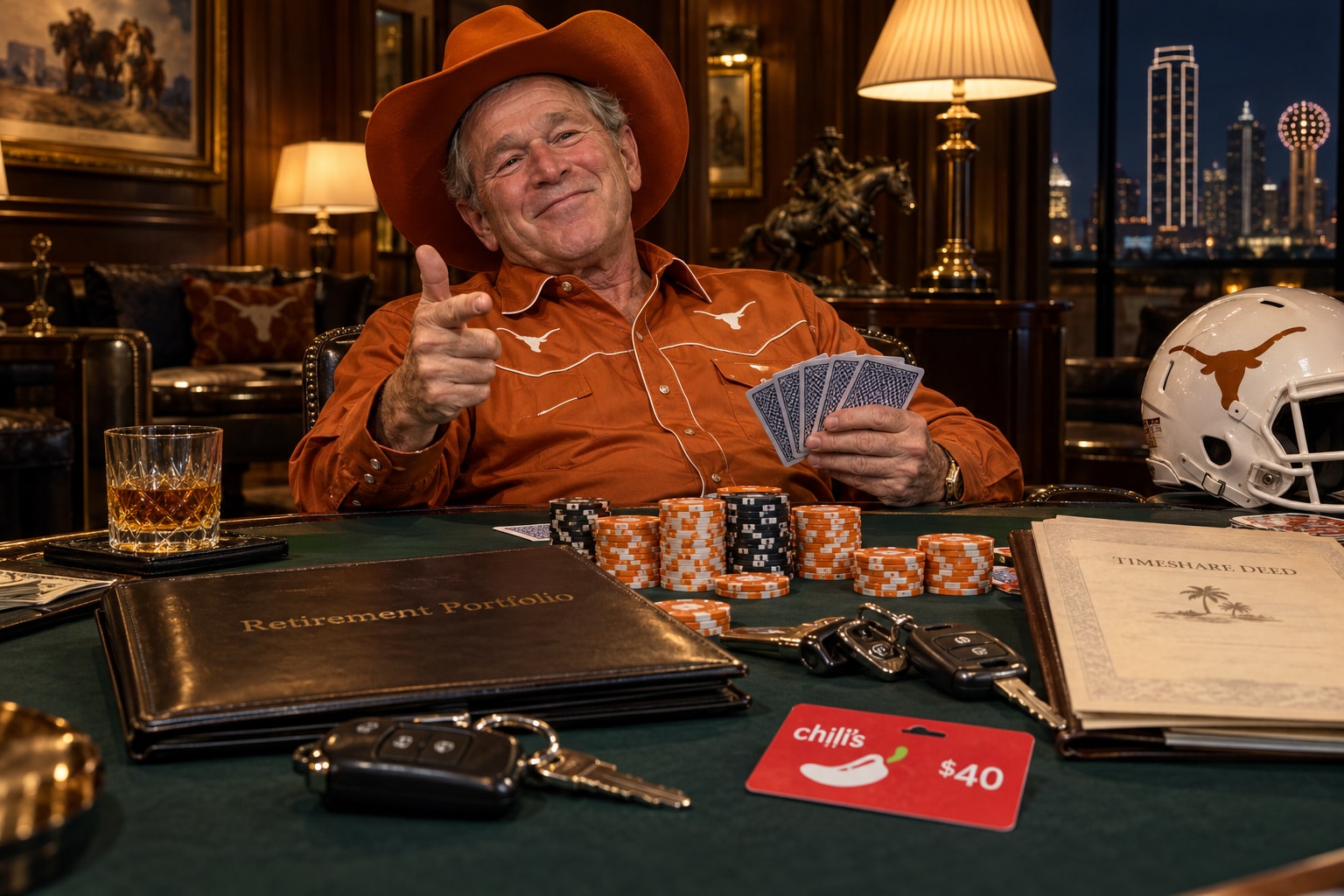
The ledger also places Mattress Mack between an old poker obligation to Switzer and a disputed George W. Bush balance filed under COLLEGE BUSINESS — DO NOT ITEMIZE.
“I understood we were talking about a friendly game,” Bush reportedly said.
“It was friendly,” Switzer replied. “You had a wonderful time losing.”
Mack attempted to settle in mattresses. The Boz rejected the offer after establishing that no available model came with a guaranteed fourth-quarter stop.
A proposal involving unlimited store credit met the same fate.
“I don’t owe the store anything,” Switzer said. “The store owes me.”
The fine print survives
Barry Tramel and Jenni Carlson reportedly began following the trail after receiving expense reports carrying the same line item: RIVALRY ADJUSTMENT.
Tramel asked why a single transaction required fourteen shell companies. “Because thirteen looked suspicious,” an accountant explained.
Carlson requested the contracts. She received a room-service menu with several numbers circled and a note reading YOU’RE GETTING WARMER.
Switzer denied running a shadow economy around the game.
“I hosted some card games,” he said. “People made some decisions.”
At press time, the oil tycoon was preparing another bid. His advisers had one recommendation: this time, get the rematch in writing.